
San Vellato by day and by night: how you build a 1921 city that doesn’t exist
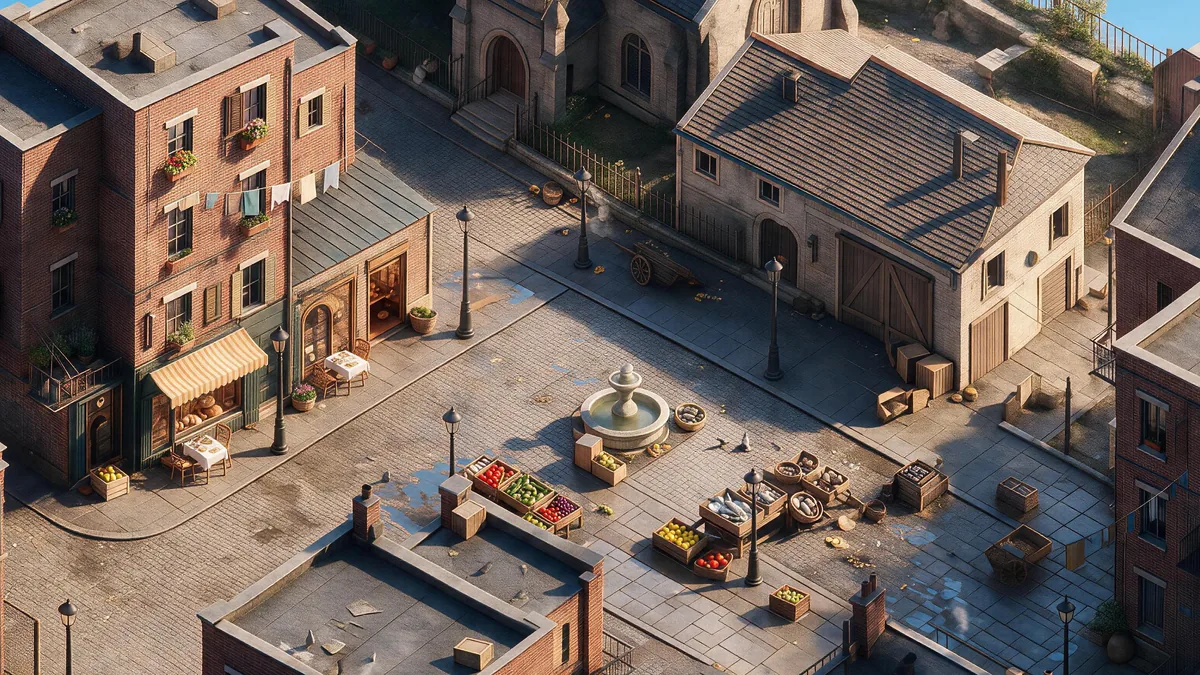
San Vellato is an invented port from the twenties. It isn’t on any map, but it has to feel as if it has stood there for a hundred years: washing strung between balconies, puddles catching the light of the streetlamps and a tram that waits for no one. This is how we are building it.
If you only read this
- Every scene is a large isometric drawing, made to be explored on foot, not crossed in a single leap.
- Most of them move: rain, harbour water, steam, smoke and flickering streetlamps.
- Every neighbourhood has a daytime and a night-time version, its own people and its own music.
A scale model seen from above
The camera in RACKETBORNE is isometric: you look at the city from high up, at a diagonal and without perspective, as if it were a scale model on a table. The whole game shares the same camera, from the trench in the first chapter to the last office in Alta Corona, so the city feels like one place and not a collection of backdrops.
The exploration scenes are big on purpose. A railway station has platforms, tracks, the signal box, the iron bridge and the alley out the back. There is room to get lost, to hide and to run into someone you didn’t expect.
What moves
A still city looks like a postcard. That is why almost every scene has movement: rain falling on the cobbles, the water in the harbour, steam from the locomotive, smoke from the chimneys, washing stirring in the wind. And the streetlamps, above all the streetlamps: their light trembles, dips and comes back, the way gaslight did in 1921.
It isn’t just decoration. In RACKETBORNE, light matters: whoever controls the streetlamps controls what the patrols see. A lit street is a watched street.
By day and by night
Every neighbourhood has two faces. By day, Santa Riva is a market of awnings, fruit and children playing around the fountain. By night it is wet brick, dark doorways and a single streetlamp burning at the end of the street. Roughly half the campaign takes place in daylight, because not everything in San Vellato happens in the alleys.
Six neighbourhoods, six ways to live
- Santa Riva: rain, brick and Max’s garage. The neighbourhood where Vincenzo grew up.
- Los Teatros: golden spotlights, maroon curtains and what you hear backstage.
- La Dársena: docks, cranes, copper and the question of who runs the port.
- Ferrovia: black iron, fog and Estación Cobre.
- Bellamare: ivory hotels, brass casinos and people who don’t want to be seen.
- Alta Corona: grey stone and Torre Moretti watching over everything from above.
The people who live here
Every neighbourhood has ten to fifteen named residents, each with something to tell: the baker, a bootblack, the dockers on the night shift, an old man with his pigeons. Some only say hello. Others ask you a favour that turns into a job. And all of them remember how you treated them: with respect or with fear.
Between one job and the next, you walk the city to its own music, different in every neighbourhood and at every hour. Guitar and accordion in Santa Riva in the morning; jazz and smoke in Los Teatros in the small hours.
On the home page you can turn Santa Riva from day to night with a single tap. It is the neighbourhood where the homecoming begins.

Coming home?
The first three chapters, The Mud, The Betrayal and Ashes of Santa Riva, are free to play.
PlayKeep reading
 How it plays
Stealth or force: how a job gets done in RACKETBORNE
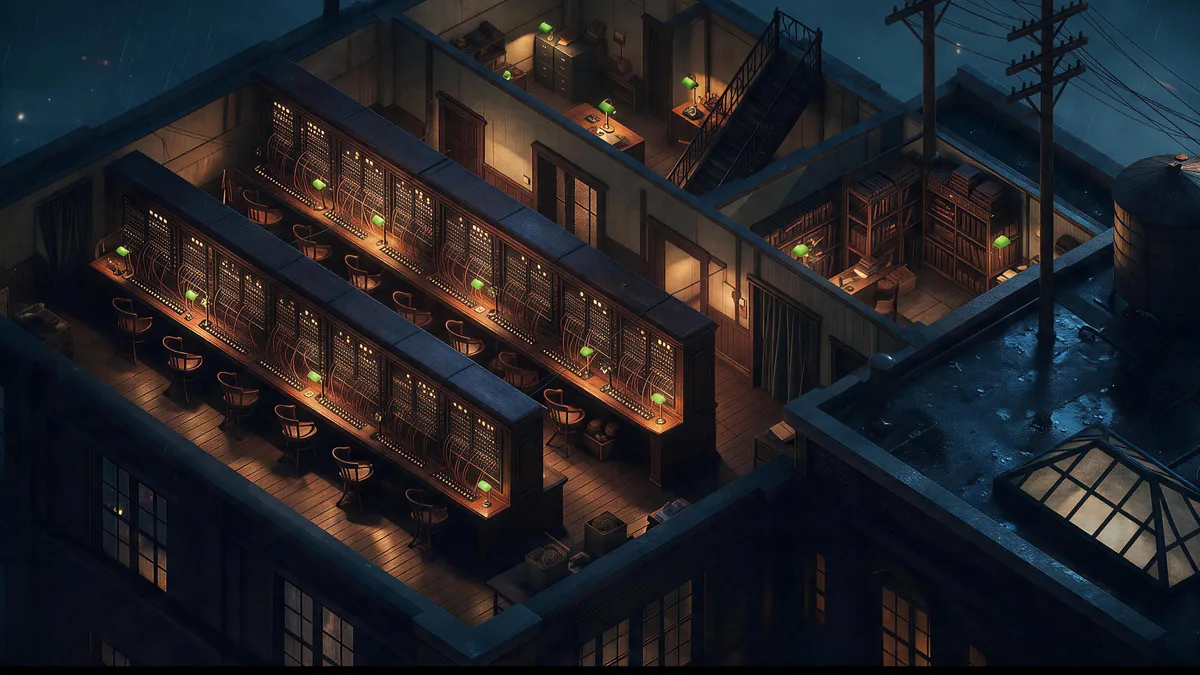
Put out a streetlamp, lift a key from a guard’s belt, listen to the dial of a safe or go in shooting. Every job has more than one way through, and every way has its price. The game